

'Remarkable' that whale species never before seen in Ireland has washed up dead
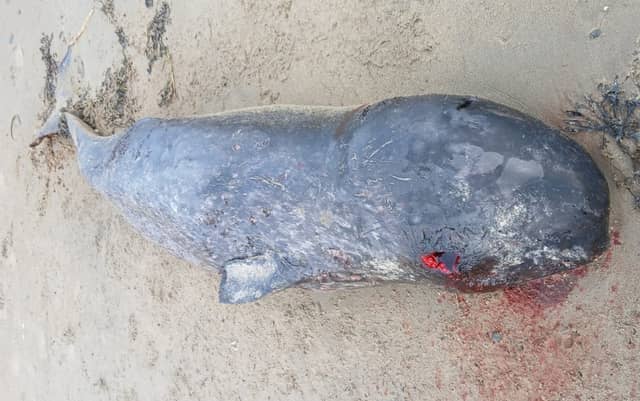

A narwhal whale, never before seen in Ireland, has washed up on a beach in Co. Donegal having usually been known to frequent Artic waters
A whale species that has never been seen in Ireland before has washed up dead on a beach in Co. Donegal.
The National Parks and Wildlife Service confirmed today that it was a female narwhal.
It was retrieved by the Irish Whale and Dolphin Group.
The narwhal is a toothed whale found exclusively in the Arctic waters of the north Atlantic.
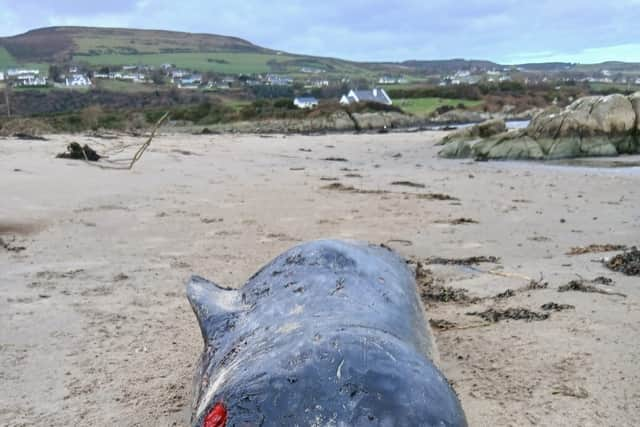
The body of the whale was found by a family walking along Sweet Nellies Beach on the Inishowen Penninsula.
They reported it to the Irish Whale and Dolphin Group which quickly sent volunteers to the scene.
They recovered the carcass and collected skin samples at the Regional Laboratory in Cork.
"The Narwhal is an arctic species that is mainly found in cooler waters. Findings like this are a stark reminder of the vulnerability of wildlife in the face of a changing climate, and the need to protect them," he added.
There are an estimated 170,000 living narwhals worldwide.
Male narwhals are famous for their long tusks, and they are often dubbed the unicorns of the sea.
The population is threatened by the effects of climate change, such as reduction in ice cover and human activities such as pollution and hunting.
Narwhals have been hunted for thousands of years by Inuit in northern Canada and Greenland for meat and ivory, and regulated subsistence hunting continues to this day.
Narwhals are rarely recorded outside the Arctic with the last stranding record in western Europe, when a young male washed up dead in Belgium in 2016.
Prior to that record, two females stranded in the Thames Estuary, England in Kent 1949.
The only sightings are of two off Orkney and one off Aberdeenshire in Scotland in 1882 and one in the Hebrides in 1976.
This is the 10th stranding record of Narwhal in western Europe and only the fourth female.
The IWDG is continuing to conduct an examination as part of a Deep Diving and Rare Investigation Programme to understand more about these kinds of rare strandings.
"It’s a remarkable stranding. As our waters warm we have seen a northern movement of whales and dolphins in Irish waters as fish move north seeking cooler waters. To have an Arctic species stranded for the first time is somewhat unexpected. However we recorded another Arctic species, a bowhead whale, in Ireland for the first time in 2016 so maybe this reflects a breaking down or Arctic ecosystems as the ice melts. Clearly one stranding cannot display any trends but it does show the importance of our long term monitoring schemes and the power of citizen scientists sending these reports to the IWDG," Dr Simon Berrow, CEO of the Irish Whale and Dolphin group, said.