

A musical history lesson in Songs from the Short Grass
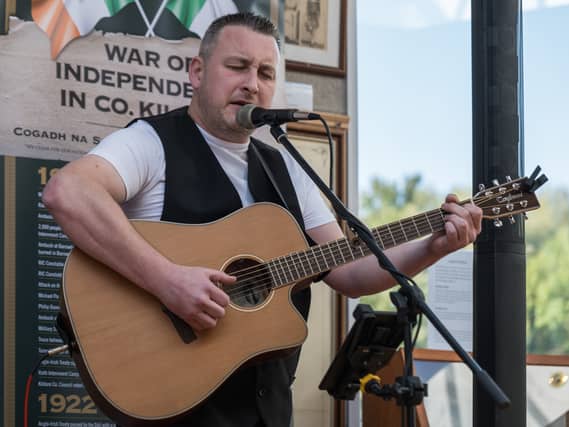

Conor McHugh talked to Darren Brereton about the stories behind the Songs from the Short Grass
A new album of Kildare songs was launched in mid-October, but with a significant twist.
The songs featured on it were all old songs, some so old that often they had not been sung for some time, in some cases over 100 years, and only the words survived.
Amazingly, the musicians involved were able to record a song based a phone recording by local historian Mario Corrigan of an elderly person who recalled it and was able to sing a verse and a chorus.
The genesis of the project came from Mario, of Kildare Libary Service, who with the Federation of Kildare History Societies, through their member groups, came up with the idea of reviving the songs.
As part of the project, and with the support of Kildare County Council under the Creative Ireland initiative, the Federation commissioned and produced a new CD entitled Songs from the Short Grass, featuring a varied range of interesting historic songs, all firmly rooted in the county.
The CD was officially launched in Kilcullen Heritage Centre on October 10.
This unique record has been put together by a group of talented Kildare musicians under the direction of Prosperous man Darren Brereton.
Darren explained that the Federation came up with a list of about 30 songs, and he whittled it down to 10.
The musician added that in many cases it is not necessarily known who wrote the various songs.
The first song, Hunt in Kildare is about, as the title suggests, the hunt in Kildare. It is less about the killing of the animals, and more about the social aspect of the event.
The second song Road to Kildare is Kildare-ised version of the Pogues song A Man You Don’t Meet Every Day.
The third song is Sean Bhean Bhocht, which is about the failure of the French to land in Ireland (due to bad weather) during the 1798 rebellion. Translated as the Poor Old Woman, it is a lament for the fact that they did not arrive as promised.
The fourth song, The Ferrets of Kildare, was not one of the original 30 short-listed songs.
However, it concerns an attempt by IRA prisoners to escape and Mr Brereton sang it at the launch of historian James Durney’s book on the War of Independence in Kildare, where it was well received.
The Curragh of Kildare is obviously a famous song when sung by Christy Moore but it was written, it is believed, by the Scottish poet Robbie Burns and is from the point of view of a young Scottish woman whose lover is away soldiering for the Queen in the Curragh of Kildare.
“So Vicky Cahill from Newbridge sang it, and I think it’s as good a recording by a woman of that song as you’ll find,” Darren said.
Hymn to St Brigid is a more contemporary religious song.
Pretty Susan is about a man who loved a woman from the Carton area near Maynooth, but because she was upper class and he was not, he was afraid to express his feelings for her and his love went unrequited. She married and prospered and he did neither.
The eighth song is Bodenstown Cemetery, and was written by the Wolfe Tones in honour of the man of the same name who was an important figure in the 1798 rebellion.
The Old Bog Road is, of course, a classic and was recorded and sung by Dave Dunne from Robertstown.
The Wake in Kildare was the song that was prompted by the phone recording.
“We used the same wordsand melody he had given me, but we rejuvenated it,” Darren explained.
The song is about a tragedy in a family, who are waking one of the members .
But a man called Roger returns and marries one of the sisters and they live happily ever after.
“A lot of Irish love songs are more about celebrating the great love than being overly descriptive about it,” the musician explained.
The Battle of Prosperous is about a man called Edmund who was on the run during the 1798 Rebellion. His mother, his wife and his baby son were murdered by the crown forces.
“It’s about loss and revenge, but then it’s also a happy song at the end because he was the one who put a pike in Captain Swaine later (in Downing’s House) during the rebellion.
The album is available for €10 Kilcullen Heritage Centre (045 481613), from Federation vice chairman Brian Mc Cabe (087 3513328), from the library in Newbridge or online at www.darrenbrereton.bandcamp.com.
Read also: READ MORE KILDARE STORIES HERE