

Don’t put bog-rosemary on your Sunday lamb

Kildare Wildlife Watch with Nuala Hannigan
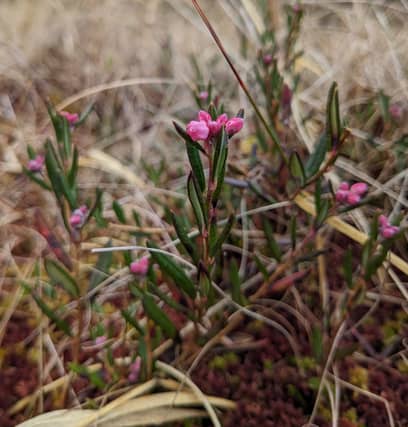
This week while visiting Lodge Bog, I observed my first bogland flower of the season, bog-rosemary (Lus na móinte as Gaeilge).
This is one of the first flowers to emerge on a bog as bog-rosemary is an evergreen.
Each spring, as the days get longer, bog-rosemary can increase its rate of photosynthesis and produce flowers earlier than those flowers such as bog asphodel which hibernates beneath the peat surface, as those plants that hibernate have to first produce their leaves before they can produce their flowers.
As its name suggests, you will find this wildflower growing on peatland habitats nationwide, it is actually one of the plants that is specific to peatlands and showcases the importance of conserving a sample of peatlands to prevent biodiversity loss.
Bog-rosemary has hairless, long, narrow dark green leaves. The underside of each leaf is white in colour and the leaves have curled margins.
Interestingly all bogland plants have small leaves.
The bog surface is open to the extremes of our environment, in the summer as the temperatures rise this in turn increases both evaporation from the bog surface and transpiration (water loss) from the bog plants.
By having small leaves this minimises water loss from the bog plants in turn helping them to survive prolonged periods of dry warm weather during the summer months.
The flower of bog rosemary is urn shaped and is first dark pink in colour before fading to light pink by June.
Even tough bog-rosemary does not hibernate its maximum height will never reach above 40cm due to the nutrient poor habitat it grows on.
Bogs are extremely nutrient poor due to the high water table limiting the natural decomposition of dead plant material which return nutrients to the soil in other habitats.
On a bog the agents of decay bacteria and earthworms cannot survive the waterlogged bog habitat.
You may enjoy rosemary, the herb, on your lamb dinner but Ireland’s native bog-rosemary is not related to rosemary the herb and should not be eaten.
If you would like help identifying a wildlife observation in your community you can contact me on [email protected].