

Farmers urged to use best practice when spraying pesticides following MCPA detections in drinking water in Kildare

By Kim O'Leary
Exceedances in pesticides have been detected in drinking water sources in Co Kildare as a result Irish Water working in partnership with the National Pesticides and Drinking Water Action Group are appealing to farmers and other users of pesticides to follow the guidelines when applying these substances to their lands.
The efforts to reduce the incidence of these detections are being coordinated by the NPDWAG. This group is chaired by the Department of Agriculture, Food and the Marine. All of the key stakeholders are represented in this group and include: other Government departments and agencies; local authorities; industry representative bodies; farming organisations; water sector organisations; and amenity sector organisations.
In Kildare exceedances were noted in the Leixlip and Barrow water supplies in 2017. While there is no threat to public health, it is imperative that users of pesticides are mindful of best practice when spraying their lands.
Commenting ahead of the 2018 spraying season, Andrew Boylan, Irish Water’s Regional Drinking Water Compliance Specialist said: “Irish Water is continuing its extensive investment programme to improve water and wastewater services in Ireland. Providing safe, clean drinking water for all is our first priority. In Ireland, the majority (82 per cent) of drinking water supplies come from surface water sources (water from rivers, lakes and streams). Such supplies are vulnerable to contamination from land and animal run-off. “
Two water supplies in Kildare has seen the herbicide MCPA detected over the past year, albeit mostly at very low levels. MCPA is used mainly for eradicating rushes, a problem for many years on Irish farms and one that looks like continuing for many more years. It is also found in other weed killer formulations used by gardeners and growers, so its use is quite widespread.
Meanwhile, speaking to KildareNow about the issue, a local Kildare councillor voiced his concern. Sinn Fein Cllr Thomas Redmond said: “This is very worrying and what's worse is we don't know the areas in Kildare this notice is covering. Pesticides are dangerous chemicals and while I understand the complexities of spraying crops we must make sure the right and proper directions are taken. In my personal view it's inexcusable spraying or spreading slurry in the rain and the notice pays particular attention to highlighting this. I would ask the IFA to make members aware if the weather is bad please be patient and wait, otherwise people will simply become poisoned.”
Arrival of spraying season
Spring is a time of year for new growth and many people are getting back out into their fields and gardens to assess the effects of winter and prepare for the year ahead. In many cases, they are finding that weeds of various kinds have taken over and action needs to be taken to leave space for the plants they want to grow.
In the modern era, the use of pesticides has played a central role but the effects of this can be far reaching and more and more detections of pesticides in drinking water are being found across the country. MCPA, which is commonly used to kill rushes on wet land, is the main offender, and careless storage, handling and improper application means it ends up in our drinking water leading to breaches of the drinking water regulations.
A single drop of pesticide can breach the drinking water limit in a small stream for up to 30 kilometres. This clearly highlights the potential risk facing many of Ireland’s drinking water sources.
Drinking water monitoring results for Ireland show that a number of pesticides commonly used on grassland, such as MCPA, are being detected more frequently.
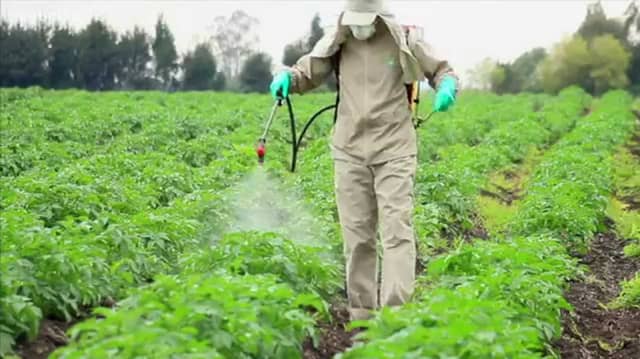
Irish Water is working in partnership with the National Pesticides and Drinking Water Action Group would like to remind farmers and professional users of pesticides of the need to follow best practice in the application of pesticides such as MCPA on land, particularly near lakes and rivers used as drinking water sources.
The basic steps in reducing pesticide risks are –
- Choose the right pesticide product
- Read and follow the product label
- Determine the right amount to purchase and use
- Don’t spray if rain or strong wind is forecast in the next 48 hours
- Make sure you are aware of the location of all nearby water courses
- Comply with any buffer zone specified on the product label to protect the aquatic environment. Mark out the specified buffer zone from the edge of the river or lake or other water course
- Never fill a sprayer directly from a water course or carry out mixing, loading or other handling operations beside a water course
- Avoid spills, stay well back from open drains and rinse empty containers 3 times into the sprayer.
- Store and dispose of pesticides and their containers properly.
A recently produced video on the correct use of MCPA can be viewed on Irish Water’s website/YouTube channel at https://youtu.be/xQqtZ7jifUs
Information leaflets on pesticide use are also available to download from the Teagasc website.