

Kildare Wildlife Watch - Find out more about our native lizard


Did you know lizards can slow their metabolism to almost a complete stop
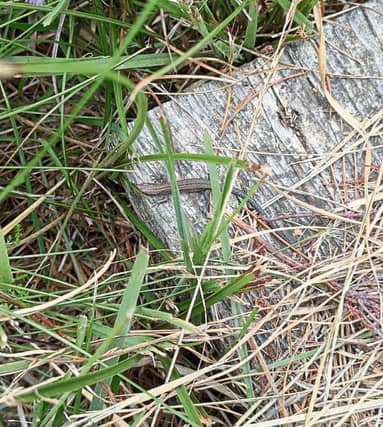
Guiding a bog walk during National Heritage Week, a group and I were delighted to observe Ireland’s only reptile the viviparous lizard (Earc as Gaeilge).
‘Viviparous’ means ‘live birth’, while the female does produce eggs, she carries them with her internally for three months before the live young are born.
The lizards the group and I observed were young, not yet fully grown to the adult size of 18cm. The viviparous lizard can be found on bogland, heathland and coastal grassland habitats. They eat insects, snails, spiders and slugs, catching them with their jaws before swallowing their prey whole.
Lizards are cold-blooded, meaning they cannot regulate their own body temperature. In cold weather, they can slow their metabolism to almost a complete stop.
To heat their body temperature and start their metabolism, they must bask in the morning sunshine, absorbing heat. This is also the best time to see a lizard on your local bog, because when they are cold they are also slow moving.
By the afternoon, the lizard will be quick to hide when disturbed. I observed the young lizards basking on the edges of a wooden bog bridge. The viviparous lizards body is covered in scales that blend in with the surrounding landscape, these scales help the lizard camouflage itself from predators.
Another method the viviparous lizard has adopted to help protect against predation is dropping its tail! Their tapered tails can be the same length as the body itself, and of course this is what a predator is going to try and grab when trying to catch the lizard.
The tail has natural fracture lines. If a predator is quick enough to grab the viviparous lizards tail, the lizard will contract muscles around the fracture line allowing the tail to fall off. The tail will grow again.
Over the coming week on a bright calm morning why not take a walk on your local bog and try and observe the viviparous lizard in your community.
If you would like help identifying a wildlife observation in your community you can contact me on [email protected].
- Nuala Madigan from the Bog of Allen Nature Centre