

Kildare's Wildlife Watch: Welcoming the peckish goldfinch to the garden

With the Irish Peatland Conservation Council
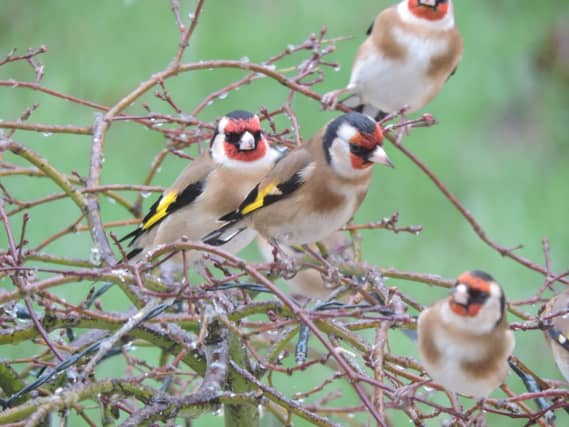
I received a number of fabulous images of this week’s species from Mr Jimmy Finn.
When sharing his images with us all, Mr Finn commented that he has been pleasantly surprised to see a rise in the number of goldfinches that visit his garden.
Mr Finn identified more than 30 goldfinches last week who were expecting their morning mix of crushed nuts.
Day after day, Mr Finn reported brightly coloured birds that came looking for their food and would not leave until they got it!
These little visitors are gladly welcomed by him during these harsh Covid times, and hopefully they will continue to flock in and brighten up his day.
Goldfinches (Lasair choille as Gaeilge) are widespread in Ireland and their populations are considered healthy according to BirdWatch Ireland.
They feed, as you may expect, on a diet of seeds, with our garden peanut feeders being very popular with this species during the winter.
They are easily recognised from their bright red faces, black and yellow wings and cream/white breasts. They build their nests from feathers and mosses in hedges and trees, and for protection they are known to build them quite high up.
Later this year the female goldfinch will lay three to seven pale blue eggs that she will incubate for 12-14 days before the young hatch.
There is an advantage to feeding garden birds at this time of year. It is known that birds show strong associations to their local areas. Enticing birds to visit your garden at this time of year will encourage them to return in summer and feed on those aphids, slugs and snails that might be feasting on your flowers and vegetables.
Happy 94th birthday, Mr Finn — thank you for sharing your wildlife experience with us all. You remind me that enjoying and learning about the variety of species in our community is a lifelong learning process.
If you would like help identifying local wildlife or indeed like to share your images of local wildlife encountered to be used in a future Wildlife Watch contact me on 045 860133 or email [email protected].