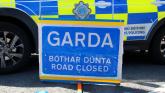
Why is there no RTE Late Late Show tonight?
Search


07 Mar 2026

Please allow ads as they help fund our trusted local news content.
Kindly add us to your ad blocker whitelist.
If you want further access to Ireland's best local journalism, consider contributing and/or subscribing to our free daily Newsletter .
Support our mission and join our community now.
To continue reading this article, you can subscribe for as little as €0.50 per week which will also give you access to all of our premium content and archived articles!
Alternatively, you can pay €0.50 per article, capped at €1 per day.
Thank you for supporting Ireland's best local journalism!

File image

Gambling, let’s face it, never had the best of images.
The frittering away had earned money that could have been more wisely spent on other things is near impossible to justify.
READ NEXT UPDATED: Constituency office of Kildare government minister and TD is targeted by activists
If it’s a choice between what we used to refer to as a loaf of bread and a wager on the bumper in Punchestown or the feeding of a hungry mouth and a wager on a maiden hurdle event in Naas, there is, so to speak, only one winner.
And it ain't the horse.
Gambling has always been with us.
The late Sean Lemass, the former Fianna Fáil Taoiseach and government minister and who is credited with encouraging Ireland’s industrial development in the 1960s, was apparently quite fond of the horses.
Closer to home, the father of a famous author was also well partial to a bet on the horses.
Maura Laverty came from Rathangan and was born in 1907 and her dad, who died a relatively young man, lost a lot of money gambling.
Ms Laverty published several novels and short stories and one of her books was somewhat of a biography of the town and some people who lived in what was then a small village were less than pleased and it wasn’t well received locally at the time.
At this remove, a bet on the horses in those days seems almost quaintly innocent.
There were no smartphones, apps, television advertising of gambling. And the betting shops kept what might be termed civilised hours. There was no night time horseracing or at the weekends.
How much all that has changed though.
The Gambling Regulatory Authority of Ireland came into being earlier this year after a protracted passage through the Dáil and Seanad.
By the time the GRAI was set up some 11 years had passed since the Fine Gael-Labour government had first proposed new gambling laws.
Its existence is necessary for a number of reasons chief among being the sheer scale of betting opportunities that are out there and the ready access to a bookie. You can place a bat any hour, any minute of the day or night on a phone whereas in the past the bookie office had to be open.
As the Irish Examiner reported in March, advocates had been crying out for well over a decade for Ireland’s gambling laws to be brought into the 21st century.
The previous legislation, drafted in the 1950s, hadn’t accounted for people having mobile phones that they’d have on them all the time that could double as a casino on their favourite gambling apps.
Prior to getting granted its full powers, the GRAI’s chief executive officer Anne Marie Caulfield and her team had enlisted the Economic and Social Research Institute (ESRI) to examine just how bad Ireland’s problem with gambling was, and its findings only reinforced the need to have the sector regulated.
“The extent of problem gambling in Ireland was much higher than previously thought,” she said. “It was 10 times higher than had been previously thought.
“That figure of 3.1% [of people] demonstrating significant harm from gambling and then a further 7% had moderate levels [of harm]. And then the fact that 47% of turnover is actually attributed to those two categories from that ESRI study was worrying.”
Furthermore, she told the Irish Examiner, the evidence that children were twice as likely to become problem gamblers in later life if they bet before the age of 18 “really does justify clamping down very hard.”
There’s lots of money to make in gambling. Paddy Power has undergone exponential growth since it was founded in 1988. It’s listed on the stock exchanges now as Flutter Entertainment.
A single share will cost you about £202 sterling. It’s grown so much in value and Flutter has many enterprises in its stable, but part of this increase was achieved off the backs of people with gambling problems - although the bookies say they have no wish to encourage problem gambling.
At that price it's not easy to accept that the only way to make money gambling is to buy Paddy Power shares - but it’s probably true.

Subscribe or register today to discover more from DonegalLive.ie
Buy the e-paper of the Donegal Democrat, Donegal People's Press, Donegal Post and Inish Times here for instant access to Donegal's premier news titles.
Keep up with the latest news from Donegal with our daily newsletter featuring the most important stories of the day delivered to your inbox every evening at 5pm.

This publication supports the work of the Press Council of Ireland and Office of the Press Ombudsman, and our staff operate within the Code of Practice of the Press Council. You can obtain a copy of the Code, or contact the Council, at www.presscouncil.ie, Lo-call 1800 208 080 or email: info@presscouncil.ie.