

National Association for GPs is urging caution against accepting GP only cards
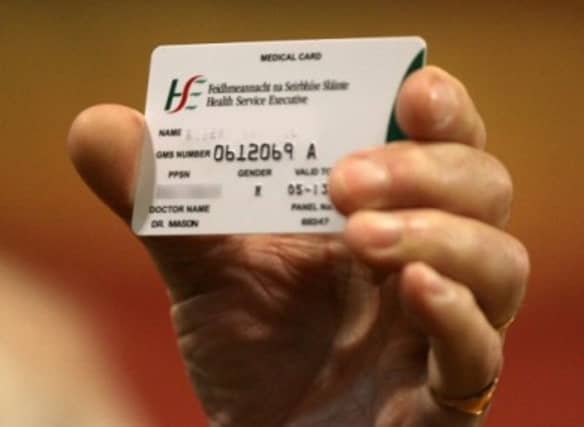

Concerns are being voiced by the Chairman of the National Association of General Practitioners about the decreasing levels of medical cards being issued.
The National Association of General Practitioners is reacting to information released under Freedom of Information revealing the number of medical cards issued dropped from 1,683,792 in 2017 to 1,561,519 by March 2019.
This coincides with an increase in Doctor Visit Cards from 470,505 in 2017 to 507,415 in 2019 as of March this year.
Dr Andrew Jordan, Chairman of the National Association of General Practitioners said: “Under Freedom of Information it has been revealed that the number of medical cards are gradually reducing, and the number of Doctor Visit Cards is, in turn, increasing.”
He said: “It is hard not to come to the conclusion that the Government or Health Service Executive are reducing the number of medical cards in favour of Doctors Visit Cards”
Dr Jordan said: “This is gravely concerning, as it dramatically reduces patient’s access to care and services”.
He said: “A full medical card allows patients access to a GP, Physiotherapy, Occupational Therapy, Counselling, Public Health Nurse services and also access to medication virtually free of charge . A Doctor Visit Card allows free access to a General Practitioner but no access to the other services.”
He said: “Sláintecare envisages universal free access to Health Care. What we are seeing here is the direct opposite. This policy undermines the Government’s commitment to Sláintecare”.
Dr Jordan said:“Patients who have a Doctor Visit Card should ask their local TD, MEP or County Councillor why it is that they cannot have full free access to our Health Services”
He said: “The Doctor Visit Card is a second class medical card and diminishes patients access to medical care. It is morally wrong. I am calling on the Minister to give patient’s the access to services that they deserve and issue full medical cards only. This is nothing more than a cynical cost cutting exercise."