

Plans for housing and apartment building axed due to possible impact on heritage of Kildare town
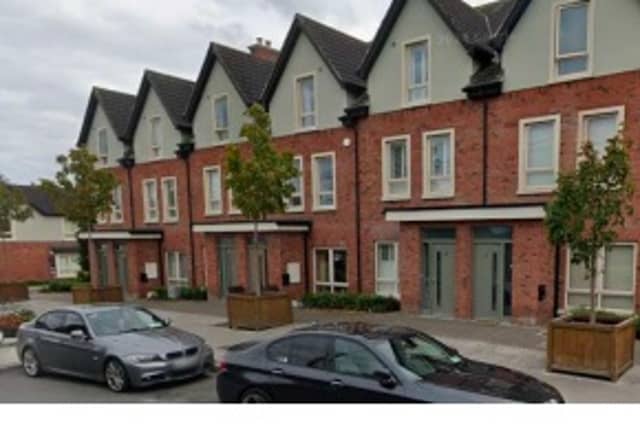

Two-storey apartment building and housing axed in Kildare town by An Comisiúin Pleanála due to possible impact on heritage of the town.
Plans for a two-storey apartment building and four houses in Kildare town have been axed by An Coimisiúin Pleanála due to concerns about their possible impact on the heritage of the town.
John Mc Cormack and Seamus Lowry had appealed Kildare County Council’s refusal of their plans for the partial demolition of the rear of the two-storey commercial premises on Dublin Road, and the demolition of industrial style units to the rear of the original commercial unit to make way for a two-storey apartment building consisting of five apartments.
The building, if granted, would have contained four two-bedroom units and one one-bed unit, covered car parking and bicycle storage area. The project also included the construction of four houses in two blocks of two-storey semi-detached houses (two three-bed houses and two two-bed houses).
The commission upheld the council’s decision to refuse permission, despite it’s inspector’s recommendation that permission be granted subject to conditions.
It said that having regard to the location within the Kildare Town Architectural Conservation Area (ACA), and the nature, scale and layout of the proposed development, at this sensitive location, it stressed “the proposed development would represent an unsympathetic and poor quality design response to the character, setting, and significance of the Kildare Town ACA.”
The commission said it had serious concerns regarding the proximity of proposed Block A to the south-western boundary, the unsuitability of the junction between the proposed extension, and the existing 19th century structure, and the projection of the proposed two-storey extension beyond the existing gable creating an awkward and visually intrusive intersection at the eaves.
In addition, the commission had concerns regarding “the poor level of amenity for future occupants of the proposed development”. In deciding not to accept the inspector’s recommendation to grant permission, the commission agreed with the inspector that a contemporary design solution may be appropriate to address the constraints of the site. However, it did have concerns about the quality of the proposed design and shared the opinion of the planning authority’s Architectural Conservation Officer that the proposed development would fail to sufficiently integrate into the established townscape.