

Recording the moths of Co Kildare


Wild Kildare Moth Project
The Wild Kildare wildlife group is looking for the public's help to record both macro and micro moth species in suitable habitat in every 10 km square across County Kildare over a five-year period.
Wild Kildare is a non profit voluntary conservation group who aim to record, promote, enhance and protect the wildlife and biodiversity of County Kildare through educational talks and outings, wildlife surveys and working on various conservation projects halting the decline of species
and their habitats occasionally in partnership with other groups.
This project aims to monitor moth distribution changes, environmental impacts and enable conservation efforts to be directed where needed.
Mercury vapour and actinic light moth traps will be used to capture moths. Once the moths have been captured, they will be identified, recorded and safely released back into habitat vegetation.
These methods will be carried out in conjunction with dusking and daytime observations.
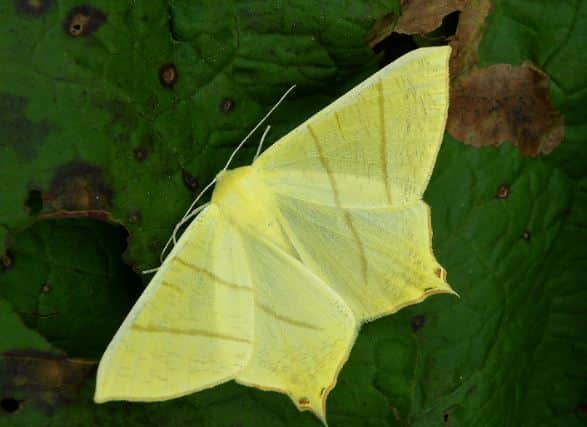
Swallow-tailed Moth
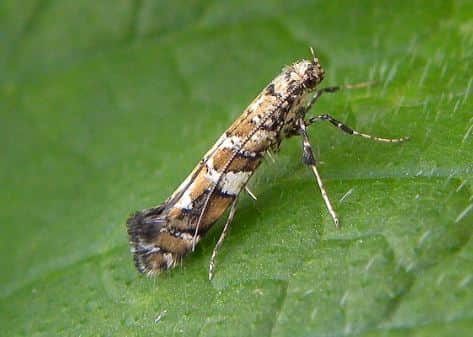
Gracillaria syringella
Spokesman Paddy Sheridan said:
"While recording for the start of the Atlas was initially slow in this, the first year of the Atlas due to the lockdown for Covid-19 we have managed to trap moths at sites in every one of the 28 10km squares in the County.
"We are delighted to report that we have recorded many species that have never been recorded in the County before, including some that are nationally rare.
"We are also waiting for confirmation that we may have discovered a new species for Ireland."
Moths are often overlooked and misunderstood, but they play a very important part in our wildlife ecosystem. They are found in just about every habitat and though numerous, they can be elusive with the vast majority of species flying at night. Ireland has over 1,500 different species of moths,
which we broadly break down into two groups, the macro (larger) moths (600 species) and the micros
(smaller) (900 species).
Recent reports have shown a worrying decline in the numbers of moths, primarily down to the loss of habitat.
These decreases in populations are not just bad news to the moths themselves, but also have worrying implications for the rest of our wildlife.
Adult moths are important plant pollinators and their caterpillars are vital food items for many other species, including amphibians, small mammals and many bird species.
Finding and Recording Moths
While moths are widespread, they are sensitive to changes and this makes them particularly useful as indicator species of ecosystem health, which allows us build up a long term picture of any changes that may be occurring.
Ways to find moths
include:
By Day: Day flying moths can be captured and recorded, especially in sunny warm
weather using a net.
At Dusk: Dusk can prove to be a very productive time for netting moths, especially as many of the smaller micros are on the wing at this time of the day.
By Night: The nocturnal habits of most moth species and their attraction to light allow recorders to
use artificial lights in the form of a moth trap as the easiest and most popular method of catching moths. The UV light attracts the moths and they hit the veins on the trap and settle in or around it unharmed. Traps can be battery powered or mains operated. The day flying species are not usually found in light traps and there are also some species that do not seem to be attracted to the UV light at all.
Caterpillars: Can be looked for both during the day and at night, though night time is usually more productive. Some of the caterpillars of micro moths are found internally between the surfaces of leaves and form a diagnostic pattern or 'mine' (leaf mining).
Gardening for Moths
Gardens are very important places for moths. Many of our
moth species are in trouble as a result of urbanization,
intensive agriculture, a general tidying up of our hedgerows,
roadside verges and gardens, use and over-use of pesticides
and herbicides (weedkillers), all of which have many negative
impacts for moths.
Any garden, regardless of size, can help moths, by providing
food, shelter and safety. Several hundred species of moths may
visit a garden during the course of the year. In general, moths
like scrubby, unkempt wild areas, with many different native
wild plants. The more caterpillar foodplants that you provide,
the more species your garden will potentially support.
Adult moths need sources of nectar, but of greater
importance is the availability of larval foodplants so that
caterpillars can feed and reach adulthood to maintain the
population. Different moth caterpillars feed on a range of
different food sources such as plant leaves, flowers, wild
grasses, seed pods, dead leaves, algae, roots and living wood.
Tips for Creating a Haven for
Moths in your Garden
Go Native! Our Irish moth species need native Irish trees and plants
to survive.
Native trees such as willow, birch, oak, hawthorn, blackthorn
and poplar are great foodplants for caterpillars
Native plants such as bramble, wild grasses, plantain,
dandelion, chickweed, stinging nettle and rosebay willowherb
are excellent foodplants
Go Wild! Let nature take its course and the moths will come.
Ditch the lawnmower. Leave parts of your lawn grow to
encourage wildflowers such as clover, birds foot trefoil and
knapweed. Day flying moths love to feed on these
Kill the weedkiller! Weeds (wild flowers) are foodplants for
moths and other pollinators
Freestyle It! Let nature make a house a home.
Create hiding places from predators. Leave overgrown areas
& grow climbers up walls
Don’t be so tidy. Leave dead plant material, like fallen leaves to
provide places for caterpillars and pupae to overwinter
Sweeten the night air. Select a variety of plants that release
scent at night to create continuous blooming all season long. The
best plants are honeysuckle, evening primrose, nicotiana, night
scented stock, common jasmine, verbena bonariensis, buddleia
and sweet rocket
Cut Out the Cutting! Hedges and shrubs provide food and shelter
for moths during their life cycle.
Don’t cut hedges and shrubs in the growing season.
Delay cutting back hedges and old plants in flowerbeds
until the late winter.
Contacts
If you feel that you would like to volunteer, make a donation or
submit photos for identification contact:
email: [email protected]
Philip Strickland: 087 686 2239 email: [email protected]
Jane Nolan: 087 748 8287
Facebook:
www.facebook.com/Wild-Kildare
Useful Resources
www.facebook.com/groups/mothsireland
www.mothsireland.com or www.ukmoths.org.uk
Please submit sightings to either
www.mothsireland.com or http://records.biodiversityireland.ie