

RSA announce relaxed measures on HGV drivers delivering fodder to farmers

The Road Safety Authority have said that they will be relaxing the enforcement surrounding HGV drivers' hours as the country deals with the ongoing fodder crisis.
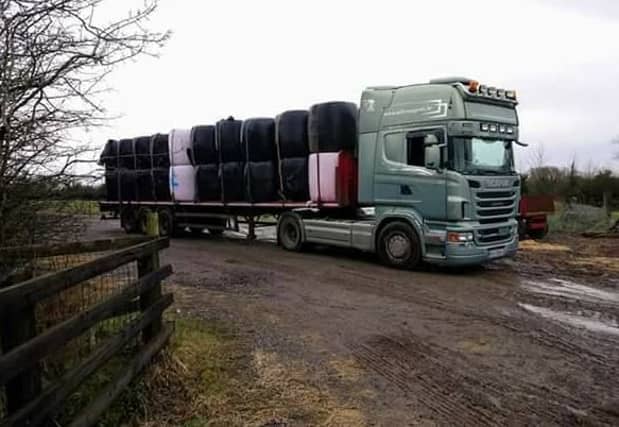
Trucks have been busy delivering fodder to various parts of the company following the first shipment of animal feed from the UK on Thursday morning, and that may lead to the stretching of resources in the HGV driving industry.
Over the last number of days there has been dialogue between the Department of Transport, Tourism and Sport, the Department of Agriculture, Food and the Marine and the Road Safety Authority in relation to the delivery of fodder to beleaguered farmers.
A statement from the RSA on Friday afternoon said;
"Recognising the extraordinary and unexpected circumstances linked to unusual weather conditions in areas of the country and adverse impacts on the availability of animal fodder, the Road Safety Authority will adopt a pragmatic approach when reviewing driver’s hours compliance with driving and resting time periods during the course of roadside inspection and at premises inspections in respect of delivery and collection of such material.
"During inspections, the history of the driver’s and operator’s overall compliance with the rules will be carefully assessed and that any deviation from the driving and resting time rules relates only to the carriage of animal fodder.
"These arrangements apply from 6 April until 20 April 2018 but will be kept under continuous review in the light of the prevailing circumstances and having regard to wider road safety considerations.
"Any deviation from the driving and resting time rules must be a last resort. HGV operators must put in place contingency measures to cater for emergency and urgent situations and this must be properly documented and retained for inspection. This should be agreed by operators and their drivers."
The RSA have said that drivers will still be required to take breaks after 4.5 hours driving, and weekly rest protocols will continue to be rigorously enforced.
Drivers must be able to point out why they are going over the normal driving limits if they do so, and they must also be able to demonstrate that the load they are delivering is related to animal fodder.