

Transport Infrastructure Ireland says that proposed scheme for removal of lighting on Kildare-Laois motorway junctions is 'fully compliant with current design standards'

By Kim O'Leary
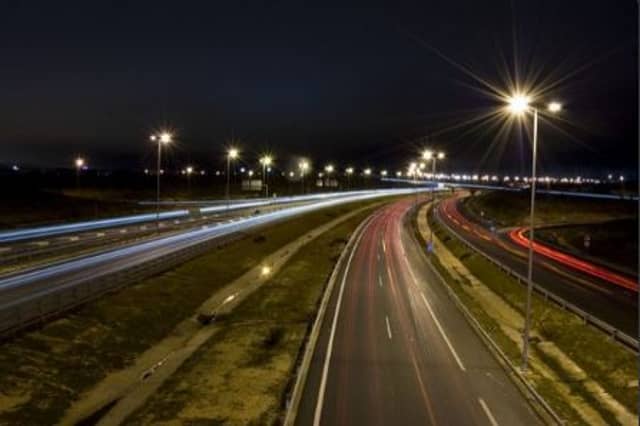
Many Co Kildare motorists could soon find their daily commute home to be slightly darker as Transport Infrastructure Ireland (TII) prepares to remove mainline public lighting from several motorway junctions in Kildare and Laois in the coming months with the aim of reducing energy consumption.
Laois TD Sean Fleming has said that he is “shocked” to hear that the public lighting at many of the motorway junctions in Laois and in Kildare are to be switched off in the coming months
Deputy Fleming said: “Transport Infrastructure Ireland has informed me that they are removing mainline lighting from the following junctions on the M7: Junction 17 - Togher, Portlaoise, Junction 16 - The Heath, Portlaoise, Junction 15 - Emo / Montague. Junction 14 – Monasterevin, Junction 13 - Kildare Town, Junction 12 – Newbridge. Transport Infrastructure Ireland (TII) have informed me that this is part of a national programme to remove mainline lighting from 35-40 junctions on the motorway/dual carriageway network throughout the country.”
Speaking to KildareNow, Deputy Fleming said: “They say that they propose to remove the mainline lighting at the above junctions as they say the current lighting is surplus to that required by current design standards. They also say that it is part of a national programme aimed at reducing energy consumption. In June I received information from the Chief Executive of TII following a letter I wrote them in May that they plan to switch off the public lighting before the Winter, and that it could save an estimated €1 million per annum nationwide in terms of electricity and maintenance costs if they do so.”
Deputy Fleming said that there are some concerns over safety if the public lighting is switched off at some motorway junctions. “Some people are concerned about the darkness, there will be darkness and it will be a shock in the beginning but people will gradually get used to it. Past Newbridge Junction 11 there aren’t lights apart from the slip road and it won’t make that much of a difference there, and the TII is saying that the removal of public lighting from the motorway junctions won’t endanger public safety,” he said.
Deputy Fleming said that he had previously made an enquiry about having lights installed at Junction 18 (the turn off for Mountrath) on the M7 as there are “lights on every junction between Dublin and Junction 18.” However, he expressed his shock to the TII’s response that they already had plans to remove the lighting on all junctions the whole way back to Junction 12 (Newbridge) and that they are implementing this on a nationwide basis.
Deputy Fleming was critical of the fact that there has been "little or no public awareness" of this plan and many people will be surprised.
"It is their plan to turn off the lights on the main motorway dual carriageway section of the road at these junctions and not on the slip road entrances/exits to the motorway or the roundabouts or the bridges over the junctions. Some people may feel this is a good idea to reduce energy consumption and light pollution. Other people will be concerned that this is the commencement of a more extensive programme to curtail public lighting at many key locations throughout the country," he concluded.
In a statement, TII confirmed that it has to consider in relation to public lighting the EU Energy Efficiency Directive (2012/27/EU) as in 2009 Ireland set a target to improve its energy efficiency by 20% by 2020, and they say that the cutting back on uncessesary lighting on motorway junctions will assist them to conserve energy while at the same time maintaining that it is 'committed to the provision of safety and efficient national road network.'
In a statement, Transport Infrastructure Ireland explained:“TII has identified 40 motorway junctions designed to the older standard which contain significant surplus lighting when compared to latest standards. Significant energy and cost savings are expected from this work. The typical level of energy savings at each junction is 70%. This will save 4 million kWh of energy and almost 2,000 tonnes of CO2 per year. This will represent an important step for TII in working towards our 2020 energy reduction targets. In monetary terms, an overall cost saving of €800,000 per year is expected for the 40 target junctions, derived from both energy and maintenance savings."
"These junctions will be monitored for a 9 month period, following which it is intended to roll out a similar treatment to the remainder of the 40 junctions identified as having surplus lighting. TII is committed to the provision of safety and efficient national road network and considers that (i) the proposed scheme for removal of lighting is fully compliant with current design standards and that (ii) research has shown that the lighting to be removed does not contribute to an improvement in road safety,” reads the statement.
For more information regarding the proposed lighting removal scheme visit http://www.tii.ie/