

How worn shock absorbers can increase your stopping distance


Squeaking vs grinding brakes and when new brake pads are needed
A car with worn shock absorbers can take longer to stop, even if its brakes and tyres are in good condition.
This matters on Irish roads, where wet surfaces, potholes and uneven rural routes are common.
As shock absorbers wear, tyres struggle to maintain consistent contact with the road. Grip decreases, stability suffers, and the distance needed to stop safely can increase.
Many drivers start looking to buy shock absorbers only after noticing obvious handling problems.
In reality, the first signs of wear often appear much earlier through reduced stability, uneven tyre wear and longer stopping distances.
If your car feels bouncy, unstable or less confident under braking, worn shocks may be the reason.
Why shock absorbers matter when you hit the brakes
Many people think shock absorbers are mainly there for comfort. Their real job is much more important.
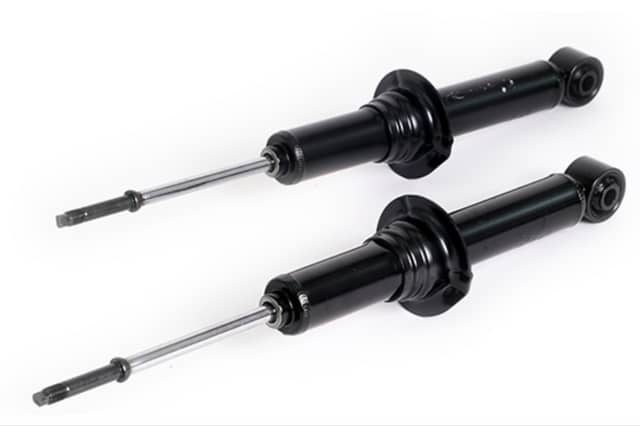
Shock absorbers control the movement of the suspension and help keep all four tyres firmly planted on the road. When you brake, the vehicle’s weight shifts forward. Healthy shock
absorbers manage this movement and help maintain maximum tyre contact with the road surface.
As shock absorbers wear, they become less effective at controlling weight transfer. The front of the vehicle may dive excessively, the tyres can lose some grip, and the car becomes less stable.
Even modern safety systems such as ABS depend on tyres maintaining proper contact with the road.
The result is simple: less control and potentially longer stopping distances.
The warning signs are often easy to miss
Unlike brake pads, shock absorbers rarely fail suddenly. Their performance declines gradually over time, making problems harder to notice.
Many drivers adapt to the change without realising how much handling and braking performance has been lost.
Common signs of worn shock absorbers include excessive bouncing, nose diving under braking, longer stopping distances, uneven tyre wear, unstable handling, knocking noises from the suspension, and visible oil leaks.
Quick Check: If you can identify two or more of the warning signs shown below, it may be worth booking a suspension inspection. Shock absorber wear often develops gradually, making
it easy to overlook until handling and braking performance begin to suffer.
If several of these symptoms appear at the same time, the issue is unlikely to be ride comfort alone. Worn shock absorbers can affect tyre grip, vehicle stability and braking performance, particularly during emergency manoeuvres or on wet roads.
How worn shocks affect handling and tyre grip
Brakes do not stop a car on their own. Tyres do.
The braking system slows the wheels, but the tyres must transfer that force to the road. If a tyre is bouncing or losing contact with the surface, available grip decreases.
This becomes especially noticeable on:
- Wet roads
- Broken road surfaces
- Roads with potholes
- Fast country roads
- Emergency braking situations
A vehicle with worn shock absorbers may feel acceptable during everyday driving but become much harder to control when a sudden stop is required.
That hidden loss of grip is one of the biggest dangers of neglected suspension components.
Front and rear shock absorbers can fail differently
The symptoms often depend on which part of the suspension is worn.
Front shock absorber problems typically cause:
- Nose diving under braking
- Unstable steering
- Excessive steering wheel vibration
- Uneven front tyre wear
Since the front suspension handles much of the braking load, worn front shocks can have a direct effect on stopping performance.
Rear shock absorber wear often causes:
- Excessive bouncing at the rear
- Squatting during acceleration
- Reduced traction
- Uneven rear tyre wear
- Poor vehicle balance
Although drivers tend to focus on the front suspension, rear dampers play an equally important role in keeping the vehicle stable.
When replacement becomes a safety issue Shock absorbers experience constant stress from road imperfections, speed bumps, potholes and changing weather conditions. There is no exact replacement interval that applies to every vehicle.
Lifespan depends on road quality, driving style, vehicle weight and component quality.
Many shock absorbers begin showing noticeable wear somewhere between approximately 50,000 and 100,000 miles. Vehicles that regularly travel on rough roads may require replacement sooner.
If your car feels less stable than it once did, or if several warning signs are present, a professional suspension inspection is worth considering.
Choosing the right replacement shock absorbers
Once replacement becomes necessary, drivers are often faced with several options. Among the most popular choices are Bilstein shock absorbers, which are available in different versions designed for different driving needs.
The three most common options are the Bilstein B4, B6 and B8.
1. Bilstein B4 for everyday driving
Bilstein B4 shock absorbers are designed as direct replacements for factory-fitted components.
They are intended for drivers who want:
- Factory-style comfort
- Predictable handling
- Stable braking performance
- A straightforward replacement solution
For most family cars and daily drivers, B4 dampers provide a driving experience that closely matches the vehicle’s original setup.
2. Bilstein B6 for more control and confidence
Bilstein B6 shock absorbers are aimed at drivers who want sharper handling without significantly changing the vehicle’s ride height.
Compared with standard dampers, they typically offer:
- Better body control
- Reduced body roll
- Improved stability during braking
- More precise steering response
They are often chosen by drivers who spend a lot of time on motorways or simply want a more controlled and responsive feel behind the wheel.
3. Bilstein B8 for lowered suspension setups
Bilstein B8 shock absorbers are designed specifically for vehicles fitted with lowering springs.
Their focus is on:
- Enhanced suspension control
- Improved responsiveness
- Reduced body movement
- Compatibility with modified suspension systems
For a standard road car, B8 dampers are usually unnecessary unless the suspension has already been lowered.
Which Bilstein shock absorber is the best choice?
There is no single winner because each model serves a different purpose.
For most drivers:
- Bilstein B4 is the best choice for original comfort and everyday use.
- Bilstein B6 is ideal for improved handling and stability without lowering the car.
- Bilstein B8 is designed for lowered vehicles and performance-focused setups.
The most important factor is not choosing the sportiest shock absorber. It is replacing worn components before they begin affecting safety.
A small component with a big impact on safety.
Shock absorbers rarely attract the same attention as tyres or brakes. Yet they play a critical role in both systems.
When dampers wear out, tyre contact with the road becomes less consistent. Handling suffers, braking performance can deteriorate and stopping distances may increase when you need maximum control the most.
For drivers across Kildare and the rest of Ireland, keeping shock absorbers in good condition is not simply about comfort. It is an important part of maintaining vehicle safety, stability and confidence behind the wheel.
**SPONSORED CONTENT**