

'Save our bogs': Conservation group calls on Kildare County Council to make space for nature

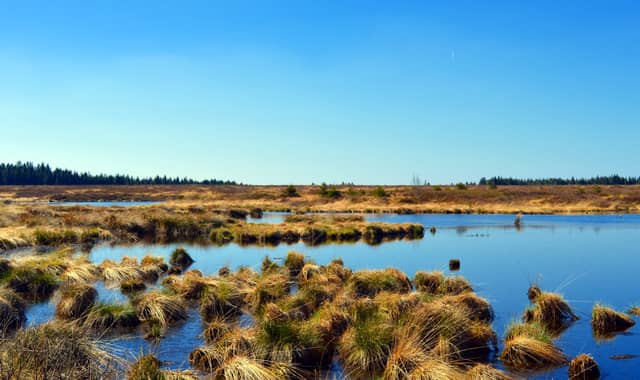

Particular attention was drawn to the Bog of Allen
A group representing a number of environmental organisations have called on Kildare County Council (KCC), as well as the government, to make space for nature.
The National Peatlands Park Group (NPPG), which represents the Irish Peatland Conservation Council, Butterfly Conservation Ireland, Birdwatch Ireland and Lullymore Heritage and Discovery Park, has revealed that it will meet with KCC at upcoming Full Council meeting on the afternoon of Monday, May 25, 2026.
Here, the NNPG will outline its conservation objectives to KCC and also seek its support in implementing it.
In particular, the NNPG has emphasised that the Bog of Allen must be designated as a special nature reserve, and that it should be ‘ultimately recognised as the gateway to a National Peatlands Park’.
The NNPG also noted that, at present, there are no national parks in the midlands and none protecting raised bogs. In fact, all of Ireland’s national parks are located on the western seaboard, with one in County Wicklow and one near Newgrange.
Summarising the call to action, the director and group co-ordinator of Birdwatch Ireland, Lorraine Benson, said: “We are calling on our government and our Local Authority [referring to KCC] to act now and put an end to this shameful legacy of neglect. “
She added that there is an opportunity to designate the remaining parts of the Bog of Allen as ‘a special nature reserve worthy of our respect’.
Ms Benson also pointed out that that 90 per cent of Ireland’s EU protected habitats are currently in decline.
‘HIGH NATURE VALUE’
Along with the Bog of Allen, Butterfly Conservation Ireland’s conservation officer, Jesmond Harding, highlighted two other ‘high nature value’ sites: Lullybeg and Lullymore.
He explained: “We call on the government to designate this area as a Statutory Nature Reserve; this is an important first step leading to revaluing nature and our natural heritage.
“The area holds at least 13 species and seven habitats listed in Annex II and Annex I of the Habitats’ Directive respectively, as well as some species listed in Annex IV, which are strictly protected under Irish and EU law.”
Mr Harding further said that Lullymore is one of three most Important Butterfly Areas (IBAs) in Ireland, while Lullybeg is one of only five places in the country where more than 100 rare Marsh Fritillary adult butterflies have been recorded.
REHABILITATION
Moreover, the manager of Lullymore Heritage and Discovery Park, Ray Stapleton, asserted that the team at the site are ‘very proud’ of their work so far.
He elaborated: “We started our rehabilitation of a former Bord na Móna cutaway in the Park in 2011.
“To witness the abundant wildlife and hear the story of how these industrial peatlands are now healing resonates with visitors and continues to attract tourist groups from around the world; it’s a major part of what we do”.
Mr Stapleton added: “The Bog of Allen is literally a treasure under our feet; there are layers of history preserved, and with a little help from us, these post-industrial peatlands can become biodiverse natural wonders.”
Furthermore, he explained how the bogs have protected people who lived in Lullymore for thousands of years: “From early settlers approximately 4,400 years ago, to a 5th Century monastic site and a rebel training camp in 1798, this sea of peat, [which measures at] almost 10 metres high, was a natural defensive barrier from possible attacks protecting local people.”