Search


09 Apr 2026
Search
09 Apr 2026

Please allow ads as they help fund our trusted local news content.
Kindly add us to your ad blocker whitelist.
If you want further access to Ireland's best local journalism, consider contributing and/or subscribing to our free daily Newsletter .
Support our mission and join our community now.
To continue reading this article, you can subscribe for as little as €0.50 per week which will also give you access to all of our premium content and archived articles!
Alternatively, you can pay €0.50 per article, capped at €1 per day.
Thank you for supporting Ireland's best local journalism!

FILE PHOTO

The Irish army, possibly including units at the Curragh Camp in Kildare, has been called in to remove heavy vehicles blocking fuel depots as part of a protest over rising fuel prices.
Justice Minister Jim O’Callaghan said that large vehicles blocking critical infrastructure would be removed.
Agriculture Minister and Kildare South TD Martin Heydon said he regarded roads as critical infrastructure but said it was up to the Justice Minister to clarify operational matters.
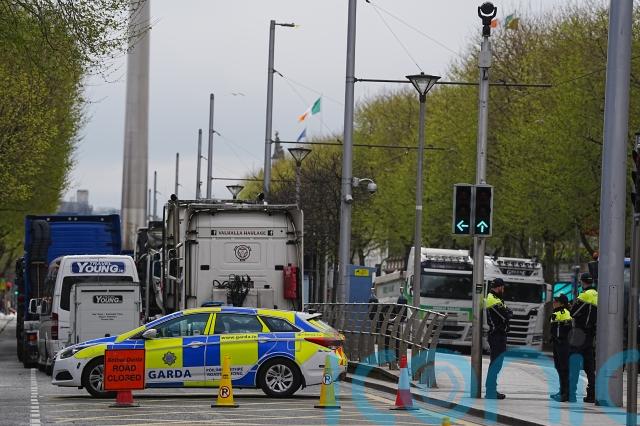
He said the Government would meet with farming and haulier representative groups but would not meet with protesters blocking cities, fuel depots and the country’s only refinery.
Protests over the Irish Government’s response to rising fuel prices entered a third day on Thursday.
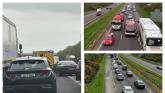
Several distinct but co-ordinated protests began on Tuesday, involving slow-moving convoys on motorways as well as the blocking of major roads in Dublin and other cities.
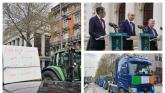
Those taking part included hauliers and agricultural contractors using large trucks and tractors to disrupt traffic.
The demonstrations continued into Wednesday, with escalations including the blockading of fuel depots and the Whitegate oil refinery in Co Cork, a move described by Taoiseach Micheal Martin as “an act of national sabotage”.
Mr Martin also said it was “not acceptable” to turn Dublin’s main thoroughfare, O’Connell Street, “into a car park” as protesters used tractors to substantially clog up traffic in the centre of the capital.
Dublin Fire Brigade said it had been delayed in responding to emergencies as a result of the protests.
Other coalition figures, including Tanaiste and Finance Minister Simon Harris, as well as Mr O’Callaghan, emphasised the importance of access to fuel depots and warned of consequences for unlawful activity.
Fuels for Ireland chief executive Kevin McPartland said there was a risk to supplies to petrol forecourts as a result of fuel depots being blocked.
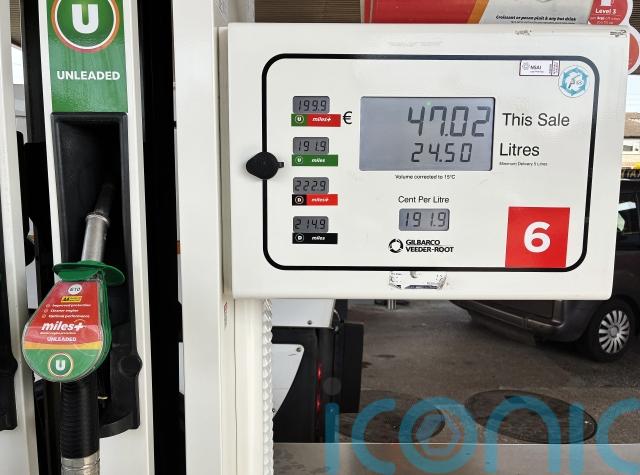
The cost of petrol, diesel and marked gas oil (“green diesel”) has soared as a result of the war in the Middle East and impacts on supplies out of the Strait of Hormuz.
Just over two weeks ago, Ireland’s coalition signed off on a range of measures to reduce fuel costs, including a temporary excise duty reduction for motor fuels, expansion of the diesel rebate scheme for hauliers and bus operators, and an extension of the fuel allowance.
It saw an effective reduction of 17 cents for petrol, 22 cents for diesel, and five cents for green diesel – but the savings were largely eroded as the war raged on.
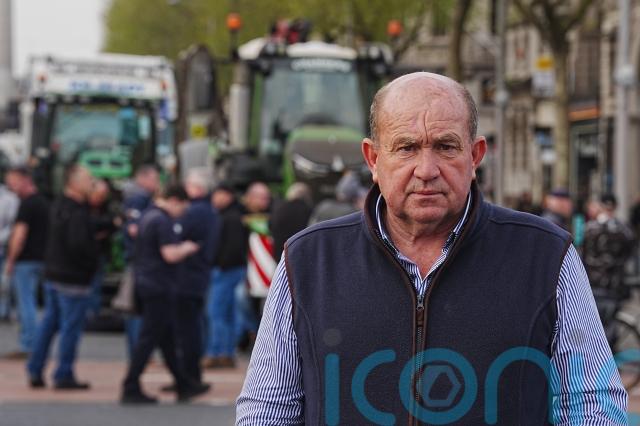
Speaking to the Press Association on Wednesday evening, city centre protest spokesman John Dallon said he hoped the dispute could be resolved through the Government committing to meeting him and two other participants.
Mr Dallon said: “These people are not going to lie down.
“The only way they will go off of the streets here is if we send a message back to them that we have a meeting, then there’s a good chance that people will go home.
“But, I mean, if there’s no satisfaction out of the meeting, I’d say it’ll all heat up again.”

Subscribe or register today to discover more from DonegalLive.ie
Buy the e-paper of the Donegal Democrat, Donegal People's Press, Donegal Post and Inish Times here for instant access to Donegal's premier news titles.
Keep up with the latest news from Donegal with our daily newsletter featuring the most important stories of the day delivered to your inbox every evening at 5pm.

This publication supports the work of the Press Council of Ireland and Office of the Press Ombudsman, and our staff operate within the Code of Practice of the Press Council. You can obtain a copy of the Code, or contact the Council, at www.presscouncil.ie, Lo-call 1800 208 080 or email: info@presscouncil.ie.